Semrush vs Ahrefs: 5 Key Differences in 2026
Choosing between Semrush vs Ahrefs is one of the most common
questions in SEO, and honestly, both tools are excellent. The
difference isn’t which one is “better” — it’s which one is built
around what you actually do most. Here are the 5 differences that
actually matter.
Semrush vs Ahrefs — Pricing
Semrush’s Pro plan starts at $139.95/month, with Guru at $249.95
and Business at $499.95. Ahrefs is slightly cheaper to start, with
a lesser-known Starter plan around $29/month — though full
technical Site Audit access requires their $229/month tier.
If budget is the deciding factor, Ahrefs’ entry point is lower, but
Semrush’s Pro plan includes more built-in features at that starting
price without needing to upgrade for basics.
Semrush vs Ahrefs — Backlink Data
This is where Ahrefs has the strongest reputation. Its backlink
index contains over 40 trillion links, and its crawler processes 8
billion pages daily — this is genuinely the deepest link database
available. Semrush’s backlink data is solid and constantly
improving, but if your work is heavily focused on link-building and
competitor backlink analysis, Ahrefs edges ahead here.
Semrush vs Ahrefs — All-in-One Features
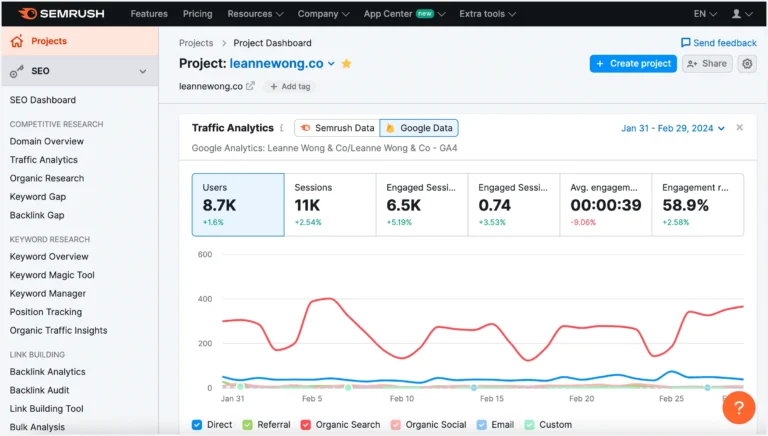
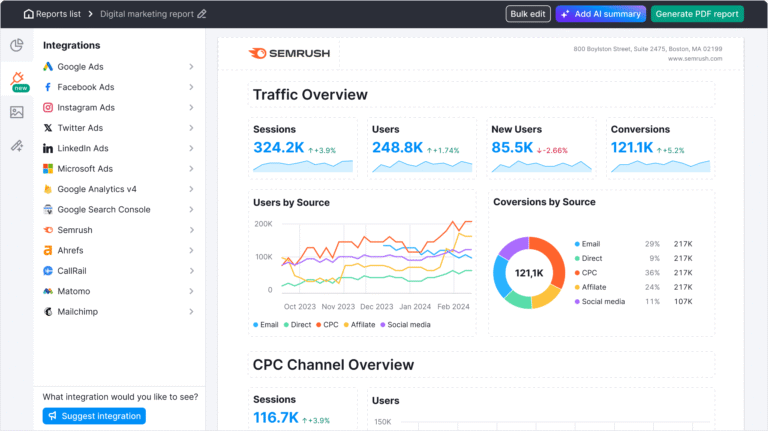
Semrush covers more ground beyond pure SEO — its keyword database
exceeds 25 billion keywords, and the platform extends into PPC
research, social media tracking, and content tools under one login.
Ahrefs is more narrowly focused on SEO and content research, with
no built-in content writing or optimization tools of its own —
you’d typically pair it with something like Surfer SEO for that.
If you want one platform covering organic, paid, and content,
Semrush is the broader tool. If you want the deepest possible SEO
and content-research data specifically, Ahrefs is more focused.
Semrush vs Ahrefs — Content Research
Ahrefs’ Content Explorer searches over 15 billion pages to help you
find high-performing content by topic, traffic, and backlink count
— genuinely useful for finding link-worthy content ideas in any
niche. Semrush answers a similar need through its Keyword Magic
Tool and content templates, integrated directly into its broader
platform rather than as a standalone research feature.
Semrush vs Ahrefs — Who Should Choose Which
Choose Semrush if you want one platform for organic SEO, paid ads,
and content — especially if you’re a small business or agency that
doesn’t want to manage multiple subscriptions.
Choose Ahrefs if backlink analysis and competitive link research
are your primary focus, and you’re comfortable pairing it with a
separate content tool when needed.
Many larger agencies actually run both — but for a small business
choosing one, the decision usually comes down to whether links or
all-in-one breadth matters more to your workflow.
Semrush vs Ahrefs — Our Final Verdict
We tested Semrush directly over several weeks, and for a small
business that wants one dashboard instead of three, it’s the more
practical starting point. If your work is specifically link-heavy —
outreach, digital PR, competitor backlink audits — Ahrefs is worth
serious consideration instead.
Read our full, tested Semrush review here → [link to review page]